Significant
🗑️ Refuse Overflow
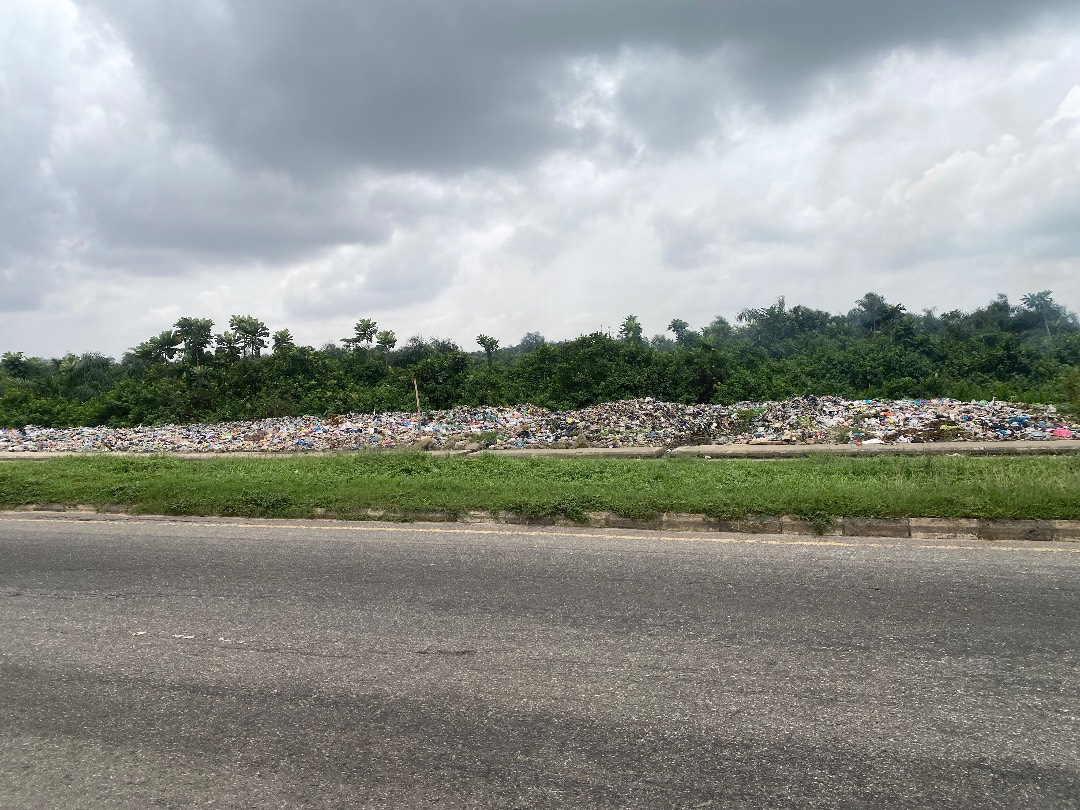
Overflowing dump site
It’s been an illegal dumping site for as long as I can remember. The lane it sits at stinks and people avoid walking along it.
Lasu-Isheri Road, Ojo, Lagos State, 102113, Nigeria18 Jul 2026
Significant
🗑️ Refuse Overflow
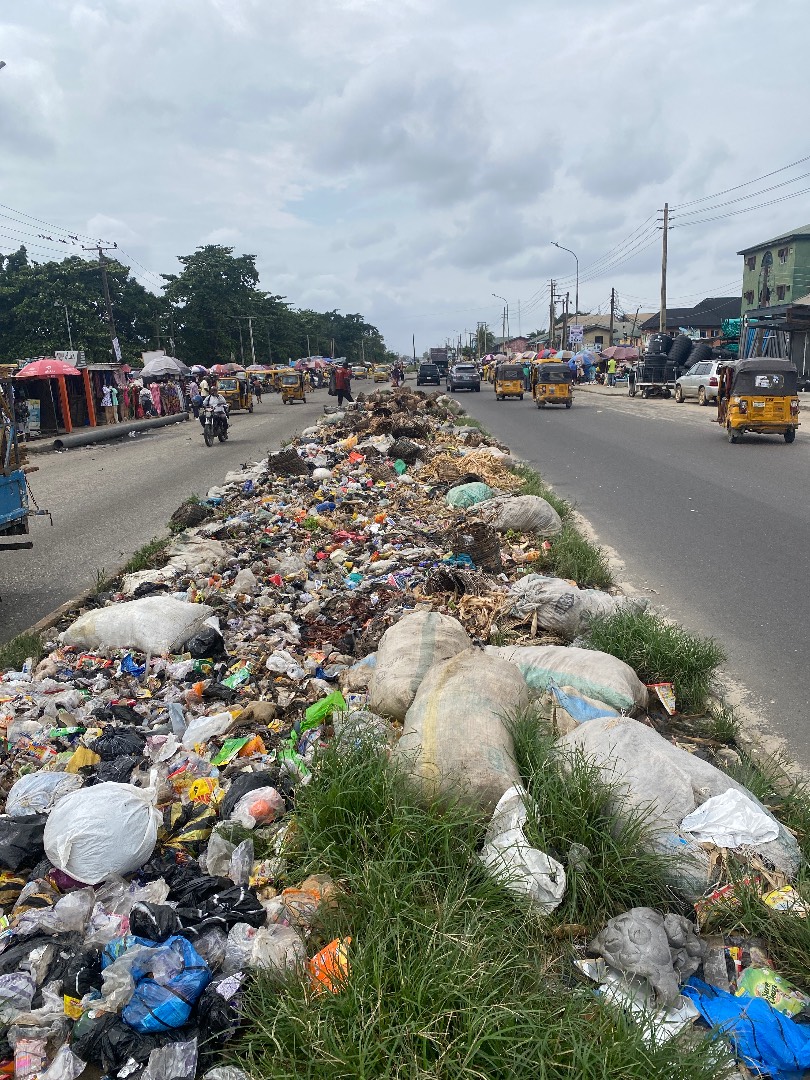
Overflowing refuse dump along LASU road
There are lots of dirt, waste, and refuse in the middle of the road. It stinks and is an eyesore
Lasu-Isheri Road, Ojo, Lagos State, 102113, Nigeria15 Jul 2026
Critical🛤️ Damaged Bridge
Moro Bridge Collapse In Kwara Strands Commuters On Ilorin-Igbeti Highway
The colonial-era Moro Bridge along the Ilorin-Igbeti Federal Highway in Kwara State collapsed in the early hours of Thursday after a heavy-duty truck passed over it, cutting off a critical transport link between Kwara and Oyo states. The bridge, located in Asa Local Government Area, had undergone repeated rehabilitation over the years due to recurring structural distress.Vehicular movement was severely disrupted, leaving commuters stranded and commercial activities halted. The Kwara State Commissioner for Works, Engr. Abdulquawiy Olododo, announced immediate traffic diversion and confirmed that engineers had been deployed to begin palliative work on alternative routes. He stated that federal authorities confirmed construction was ongoing on a new Moro Bridge near the collapsed structure.Transport operators and commuters lamented the disruption, describing it as a major setback that increased transportation costs and delayed movement of goods along the corridor connecting Kwara's northern district to Oyo State and routes towards the Benin Republic border.
Moro Bridge Collapse In Kwara Strands Commuters On Ilorin-Igbeti Highway· Punch
Moro Bridge, Ilorin-Igbeti Federal Highway, Asa LGA12 Jul 2026
1
Critical🏠 Building Collapse
Lagos Building Collapse: Eight Dead, 26 Rescued In Alakija
Eight persons, including an infant girl, were confirmed dead after a three-storey shopping complex collapsed in the Alakija area of Lagos-Badagary Expressway. The Lagos State Emergency Management Agency reported that 26 other victims were rescued from the rubble as emergency responders continued search and rescue operations.The building, which housed shops and business premises, collapsed earlier in the day, prompting activation of the state's emergency response system. LASEMA Permanent Secretary Dr Olufemi Oke-Osanyintolu said a multi-agency rescue operation was launched immediately, with responders including LASEMA, the Lagos State Building Control Agency, and CRCC Construction Company.Heavy-duty equipment, including an excavator, was deployed to support rescue efforts. The Lagos State Fire and Rescue Service confirmed additional casualties, with Controller General Margaret Adeseye disclosing that search operations continued into the evening as emergency workers combed through the debris.
Lagos Building Collapse: Eight Dead, 26 Rescued In Alakija· Punch
Alakija area, Lagos-Badagary Expressway12 Jul 2026
1
Serious🗑️ Open Sewer
Nigeria's Urban Wastewater Treatment Below 20% — NAE
The Nigerian Academy of Engineering revealed that less than 20 per cent of urban wastewater in Nigeria was properly managed, based on findings from a lecture titled 'Wastewater Management: Impact on Health and Environment' hosted by the academy in May 2026. NAE President Prof Ramon Bello disclosed the figure during the 2026 Pre-Apex Event in Lagos.Bello stated that engineering solutions for wastewater and sewage management were not a luxury reserved for wealthy nations but a fundamental requirement of a just and healthy society. He called for the implementation of the Presidential Power Initiative to upgrade the national grid while aggressively pursuing the energy mix agenda via solar, hydro, and other green energy schemes.The academy highlighted that the critical state of urban sanitation posed significant risks to public health and environmental sustainability, noting that the issue required immediate attention from policymakers and engineering professionals. Bello emphasised the academy's commitment to championing wastewater management as part of the national engineering and development agenda.
Nigeria's Urban Wastewater Treatment Below 20% — NAE· Punch
12 Jul 2026
1
Serious🌉 Blocked Canal
NIWA Engages Firm For Major Waterways Clean-up In Nigeria
The National Inland Waterways Authority engaged environmental company PartsCentral Limited to provide strategic oversight and implementation support for a comprehensive clean-up initiative designed to restore the nation's waterways and enhance their economic potential. The project aimed to tackle persistent problems of waste pollution, indiscriminate dumping of refuse, oil spillage and environmental degradation across Nigeria's vast inland waterways.The initiative would identify major sources of pollution, facilitate systematic waste removal, and promote innovative waste-to-wealth solutions capable of creating employment opportunities for communities situated along the waterways. Beyond environmental restoration, the project was designed to improve navigational safety by removing obstacles that hinder the smooth movement of vessels.Managing Director of PartsCentral, Henry Onifade, assured Nigerians that every aspect of the programme would be professionally executed to deliver lasting results. He called on government agencies, private sector operators, host communities, environmental groups and all stakeholders within the maritime sector to support the initiative.
NIWA Engages Firm For Major Waterways Clean-up In Nigeria· Punch
12 Jul 2026
1
Serious🛡️ Criminal Activity
FG Plans AI-Powered Policing, Fibre Network For Police Stations
The Federal Government unveiled plans to deploy artificial intelligence and expand fibre connectivity to police stations nationwide, following the signing of a Memorandum of Understanding between the Ministry of Communications, Innovation and Digital Economy and the Nigeria Police Trust Fund in Abuja. The Minister of Communications, Innovation and Digital Economy, Dr Bosun Tijani, said the initiative would focus on connecting police facilities to the national fibre backbone while introducing data-driven tools to improve policing outcomes.Tijani said the project would begin with the mapping of police stations across the country to determine their proximity to fibre infrastructure and identify connectivity gaps. The minister noted that the Federal Government had already committed to laying about 90,000 kilometres of fibre optic cable nationwide, with points of presence expected in over 7,000 wards.The initiative is anchored on the National Anchor Institutions Connectivity Programme and aligns with ongoing digital infrastructure efforts under Project BRIDGE, which seek to connect critical public institutions to Nigeria's national fibre backbone. Under the plan, the government will develop a national geospatial database of police stations, assess infrastructure gaps, and design last-mile connectivity solutions linking facilities to nearby fibre points of presence.
FG Plans AI-Powered Policing, Fibre Network For Police Stations· Punch
12 Jul 2026
1
Serious🛤️ Collapsed Road
Lagos Motorists Groan Over Collapsed Access Ramp On Lagos-Abeokuta Expressway
Motorists plying the Lagos-Abeokuta Expressway reported frustration over the collapse of a section of an access ramp linking the highway to the Oshodi-Apapa Expressway bridge. The damaged section had remained unattended for an extended period, with the situation worsening after recent rainfall left the collapsed portion submerged in floodwater, making it impossible for drivers to assess the depth of the damage.A correspondent observed vehicles moving at a crawl as drivers carefully manoeuvred around the affected section. Motorists described the road as becoming a trap, particularly at night when poor visibility compounded the risk of robbery. Ride-hailing drivers warned that the damaged section could expand if not addressed, as continuous water flow around the affected area could worsen erosion.The motorists urged the Ministry of Works and other relevant agencies to carry out immediate repairs before the situation deteriorated further. The Lagos State Ministry of Works and Infrastructure spokesperson could not be reached for comment.
Lagos Motorists Groan Over Collapsed Access Ramp On Lagos-Abeokuta Expressway· Punch
Access ramp linking Lagos-Abeokuta Expressway to Oshodi-Apapa Expressway bridge12 Jul 2026
1
Serious🛤️ Collapsed Road
Residents, Motorists Lament As Alfa Nla Road In Agege Collapses
Residents and motorists in the Agege area of Lagos State called for urgent rehabilitation of Alfa Nla Road, which had deteriorated severely over approximately three years without intervention from relevant authorities. The badly damaged section became flooded whenever it rained, with large potholes submerged in stagnant rainwater making movement difficult.Blocked drainage channels prevented rainwater from flowing freely, accelerating the road's deterioration. Residents reported that the inability of water to drain had turned the affected stretch into a permanent hazard, with motorists forced to abandon the damaged lane and drive against oncoming traffic during evening rush hours, further damaging the remaining lane.Commercial bus drivers reported increased vehicle maintenance costs due to hidden potholes beneath standing water. Residents blamed the situation on completely blocked drainage channels along the affected stretch and urged the Agege Local Government and Lagos State Government to intervene before the road became completely impassable.
Residents, Motorists Lament As Alfa Nla Road In Agege Collapses· Punch
Alfa Nla Road, Agege, linking Pen Cinema and Oke-Koto areas12 Jul 2026
1
Serious🛤️ Blocked Drain
Flooded Drainage Along Lagos-Abeokuta Expressway Sparks Safety Fears
Residents living along the Apapa-Oworonshoki Expressway corridor raised alarms over severely blocked drainage channels that left portions of the road submerged after even moderate rainfall. The standing water stretched for several hundred metres, forcing vehicles to slow to a crawl and creating hazards for motorists unfamiliar with the depth.The situation had persisted for weeks, with community members alleging that periodic clearing exercises by the Lagos State government had been insufficient. Silt, plastic waste, and construction debris had accumulated to the point where the drainage channels were effectively non-functional in several sections.Safety advocates warned that the standing water concealed potholes and road damage, increasing the risk of vehicle breakdowns and traffic accidents, particularly during evening hours when visibility was reduced.
Flooded Drainage Along Lagos-Abeokuta Expressway Sparks Safety Fears· Punch
Apapa-Oworonshoki Expressway corridor12 Jul 2026
1
Critical🌊 Blocked Drainage
Cross River Floods: NEMA Blames Blocked Drainages, Two Dead
The National Emergency Management Agency attributed recurring flooding in Cross River State to indiscriminate waste disposal and blocked drainage channels, following heavy rainfall that submerged several communities and left many residents stranded. The flooding reportedly claimed two lives and left several others hospitalised.NEMA's Uyo Operations Office Head, Mrs Aisueni Mmandu, said improper waste disposal had continued to worsen flooding across affected communities. She urged residents to stop dumping refuse into drainages and waterways, noting that plastics and non-biodegradable materials obstruct water flow and increase flood risks.Residents of Big Qua community reported that flooding had affected the area for more than five years, with Thursday's incident occurring at about 2:30 a.m. when buildings and fences collapsed. The Director of Flood and Erosion Control in the Cross River State Ministry of Environment said many affected communities were located on natural flood plains, making them vulnerable despite engineering interventions.
Cross River Floods: NEMA Blames Blocked Drainages, Two Dead· Punch
Calabar Municipality and Calabar South communities12 Jul 2026
1
Critical🛤️ Damaged Bridge
Bridge Collapses On Kuje-Gwagwalada Road, Commuters Stranded
A bridge at Chukuku village along the Kuje-Gwagwalada road collapsed following a heavy downpour, stranding commuters and cutting off access between the two areas. Vehicles travelling between Gwagwalada and Kuje were unable to pass, leaving passengers and residents of Chukuku and neighbouring Kiyi village cut off.Construction workers handling the dualisation of the road were seen using an excavator to fill part of the collapsed section with laterite to enable motorists to manoeuvre through, while work also continued on a new bridge. Motorcycle riders and tricycle operators were forced to drop passengers at the scene, leaving many commuters to continue their journeys on foot.Residents attributed the collapse to a weak structural foundation, noting that erosion had created a deep gully that split the road into two. A civil servant who commutes daily across the bridge described having to cross the river on foot before boarding a motorcycle to reach her workplace.
Bridge Collapses On Kuje-Gwagwalada Road, Commuters Stranded· Daily Trust
Bridge at Chukuku village, Kuje-Gwagwalada road12 Jul 2026
1
Critical🛤️ Collapsed Road
N38bn Nasarawa-Oweto-Otukpo Road Collapses Three Years After Commissioning
Barely three years after it was commissioned by former President Muhammadu Buhari at a cost of N38 billion, the Nasarawa-Oweto-Otukpo Federal Road in Benue State suffered extensive structural failure. Large sections of the road became impassable, with asphalt peeled off, shoulders caved in, and erosion carving deep channels across the carriageway.The road, designed as a strategic alternative corridor to reduce travel time and boost trade, lay abandoned and severely damaged. In some areas, motorists diverted into nearby bushes to bypass collapsed portions, while other stretches were completely impassable. Several culverts were found either exposed or damaged, raising concerns about drainage design.Investigations showed the collapse coincided with a sharp decline in traffic caused by worsening insecurity along the corridor. Heavy articulated vehicles that used the road after its commissioning accelerated deterioration, as the absence of functional weighbridges allowed overloaded vehicles to operate unchecked. Infrastructure experts raised concerns about possible design flaws, substandard materials, and weak supervision.
N38bn Nasarawa-Oweto-Otukpo Road Collapses Three Years After Commissioning· Daily Post
Nasarawa-Oweto-Otukpo Federal Road, Benue State12 Jul 2026
1
Critical🏪 Fire Damage
Kano Singer Market Fire Destroys N5bn Properties, Seven Missing
A fire outbreak at the Singer Market in Kano destroyed properties worth over N5 billion, affecting more than 1,000 businesses and leaving seven persons missing. The market chairman, Alhaji Junaid Zakari, described the incident as one of the worst tragedies in the market's history, with four residential buildings housing small-scale businesses razed.Goods, equipment, and valuables were completely burnt, crippling the livelihoods of hundreds of families. One shop owner reported losing goods worth over N200 million, while another estimated losses at N340 million. Governor Abba Yusuf visited the scene while the fire was still raging.Emergency responders and security agencies worked to determine the cause of the inferno. The chairman stressed the urgent need for support to help affected traders rebuild their businesses, noting that seven persons remained missing as investigations continued into their whereabouts.
Kano Singer Market Fire Destroys N5bn Properties, Seven Missing· Vanguard
Singer Market, Kano12 Jul 2026
1
Critical⚡ Prolonged Outage
Nationwide Blackout As National Grid Collapses For First Time In 2026
Nigeria's national electricity grid collapsed for the first time in 2026, plunging the entire country into darkness. Data from the Nigerian Independent System Operator showed power generation dropped to 0 megawatts at about 1:00 pm, indicating a total shutdown of the grid.The collapse triggered widespread blackouts across the country, with all 11 electricity distribution companies recording zero allocation. Consumers reported loss of power shortly after midday, disrupting businesses, households, and public services. The complete shutdown affected consumers nationwide.Grid failures in Nigeria are often linked to inadequate generation capacity, transmission constraints, frequency instability, gas supply challenges, and technical faults within the transmission network. The national grid has suffered repeated collapses in recent years, raising concerns about the resilience of the country's power infrastructure.
Nationwide Blackout As National Grid Collapses For First Time In 2026· Nairametrics
12 Jul 2026
1
Serious🏥 Drug Shortage
Patients Lament Shortage Of Staff, Drugs In Ondo, Osun, Ekiti Hospitals
Patients across public hospitals in Ondo, Osun, and Ekiti states faced severe healthcare disruptions due to staff shortages and a lack of essential drugs. Patients reported being required to purchase medications from outside pharmacies at high cost, describing the situation as a major crisis leading to non-adherence, worsened health conditions, and fatalities.A medical practitioner, Dr Ayorinde Adewale, identified the acute shortage of health professionals in general hospitals as a major challenge, noting that many specialist doctors including neurosurgeons, cardiologists, and oncologists had left the country due to poor remuneration. The doctor-to-patient ratio was reported at approximately 30 to one.The Chief Medical Director of the Obafemi Awolowo University Teaching Hospital Complex called for improved funding to address infrastructural and operational challenges, citing the "Japa" syndrome and industrial disputes as factors affecting service delivery. The Ekiti State Hospital Management Board chairman said the state government had begun construction of three new general hospitals and was recruiting about 100 doctors in batches.
Patients Lament Shortage Of Staff, Drugs In Ondo, Osun, Ekiti Hospitals· Vanguard
Public hospitals across three states12 Jul 2026
1
Critical🏫 Dilapidated School
Building Collapse Near Lagos Primary School Leaves 450 Pupils Homeless
A three-story residential building collapsed near Oke-Afa Primary School in the Ejigbo area of Lagos State, displacing approximately 450 primary school pupils who used the school premises as their learning space. The collapse occurred in the early morning hours, with emergency responders arriving to pull survivors from the rubble.No fatalities were recorded, but several residents sustained injuries and were treated at nearby medical facilities. The building had reportedly shown signs of structural weakness before the collapse, with residents noting cracks in the foundation over several months. The Lagos State Emergency Management Agency coordinated rescue operations while officials from the Lagos State Ministry of Physical Planning and Urban Development assessed the structural integrity of adjacent buildings.The school's headteacher confirmed that classes had been suspended indefinitely, affecting the 450 pupils enrolled in the school. The Lagos State Universal Basic Education Board was contacted for temporary relocation arrangements, but no immediate alternative had been provided at the time of reporting.
Building Collapse Near Lagos Primary School Leaves 450 Pupils Homeless· Punch
Oke-Afa Primary School area, Ejigbo, Lagos12 Jul 2026
1
Serious🏫 Dilapidated School
Anambra Schools Operate Without Teachers As Buildings Crumble
Public primary schools across Anambra State operated without qualified teachers while school buildings deteriorated into unsafe conditions, according to a survey of educational facilities across multiple local government areas. Several schools had roofs blown off, walls cracked, and classrooms rendered unusable by rain and wind damage.The Anambra State chapter of the Association of Primary School Headteachers raised an alarm that many schools had been operating in "quasi-conditions" for more than two years without government intervention. Headteachers reported that buildings that showed damage during the 2024 rainy season had not been repaired, leaving pupils to study under trees and open pavilions.Parents expressed frustration at the state of educational infrastructure, noting that the conditions violated basic safety standards. The Anambra State Ministry of Education acknowledged the challenges but cited budget constraints, saying that a comprehensive renovation programme was being planned for the next fiscal year.
Anambra Schools Operate Without Teachers As Buildings Crumble· Punch
Public primary schools across Anambra State12 Jul 2026
1
Serious🚰 Pipe Burst
FCT Residents Lament Three-Year Water Supply Disruption In Kubwa
Residents of Kubwa Extension in the Bwari Area Council of the Federal Capital Territory reported a complete disruption of water supply lasting approximately three years, with the Federal Capital Territory Water Board unable to restore service to the densely populated estate. A major water pipeline serving the area burst, and residents alleged that repeated complaints to the FCT Water Board had yielded no response.Households had resorted to purchasing water from private water tankers at costs ranging from ₦3,000 to ₦5,000 per trip, placing significant financial strain on families. Community leaders said the pipeline had suffered multiple bursts over the preceding three years, each time taking months to repair before the most recent failure left the entire extension without any piped water.The chairman of the Kubwa Extension Residents Association said the community had held several meetings with FCT Water Board officials who consistently promised action but never followed through. He stated that the situation had become a public health concern, particularly for children and the elderly who struggled to access water from alternative sources.
FCT Residents Lament Three-Year Water Supply Disruption In Kubwa· Daily Trust
Kubwa Extension, Kubwa, Bwari Area Council12 Jul 2026
1
Serious🛡️ Vandalism
Vandalism Halts Lagos-Kano Railway Operations — NRC
The Nigerian Railway Corporation suspended operations on the Lagos-Kano Standard Gauge Railway corridor after repeated acts of vandalism damaged signalling equipment and overhead communication cables along the Kaduna-Kano stretch. The NRC managing director confirmed that vandals had removed critical components from the railway's automated signalling system, forcing a complete halt to passenger and cargo services.The vandalism occurred across multiple locations between Kaduna and Kano, with security patrols reporting that cable theft and equipment removal had escalated over several weeks. The NRC said the affected sections covered approximately 180 kilometres of the corridor, with replacement parts requiring special procurement from international suppliers.Passengers who had booked travel on the affected routes were offered partial refunds or rebooking onto alternative dates. Freight operators reported significant delays to goods shipments along the corridor, with agricultural produce and manufactured goods stuck at depots in both Kaduna and Kano. The NRC said it was working with security agencies to restore services but could not provide a timeline for full resumption.
Vandalism Halts Lagos-Kano Railway Operations — NRC· Punch
Lagos-Kano Standard Gauge Railway corridor12 Jul 2026
1